What’s Really Happening to Our Industry: A Follow-Up From Someone Who’s Lived It
For 25 years I’ve been surrounded by tiles, factories, showrooms, lorries, containers, fitters, reps, customers and every headache this industry can throw at you. It gave me stability. It gave my family a life. It gave me pride. And most of all it created a relationship with my late father that I will cherish forever. Over the years, like so many of you, I’ve watched it shift in ways none of us expected.
After publishing my last article, I’ve had conversations with people who’ve been in this trade even longer than I have. Owners. Installers. Managers. Factory reps. People who’ve lived the highs, the lows, and the slow decline that’s now happening right in front of us.
This is the follow-up, not to repeat the same points, but to go deeper and say the things many are thinking but don’t want to say out loud.
Here’s a short recap of the reality we already know:
- Margins have collapsed.
- Independents are disappearing quietly, in their hundreds.
- Big brands are failing publicly.
- Costs have risen across every line of the chain.
- Disposable income has dropped, and the market has changed faster than the workforce.
- The industry is evolving, but too many of us haven’t evolved with it.
Now let’s talk about the real shift.
1. The Economics Have Flipped
Here’s a simple, uncomfortable example:
Clients used to spend £50/m² on tiles and £25/m² on fitting.
Today they’re spending £35/m² on tiles and £50–£70/m² on fitting.
I’m not criticising tilers, most of them are working incredibly hard, investing in equipment, improving their skills, and adapting to large-format, decorative slabs, and specialist installations. They deserve to earn properly for that.
But we can’t ignore the maths:
- The product has become cheaper.
- The labour has become more expensive.
- Clients aren’t stupid, they’re following the numbers.
And this is where the decision-making shifts. When you can get bathroom panels that look “ok” fitted for a fraction of the cost, or microcement done in a seamless finish (even if half of it fails), or LVT installed at a more predictable rate, the average household chooses differently.
Is this the tilers’ fault?
No, the entire chain is reacting to pressure.
Everyone is fighting to survive. Everyone’s costs have gone up. Everyone is trying to claw back what the system has stripped away.
It’s not one group’s problem. It’s the entire economic structure collapsing inwards, whilst still trying to operate like we did 20 years ago.
2. The Skills Gap Is Now a Structural Gap
This industry has changed faster than the people working inside it.
Tiles today aren’t the tiles of 2005.
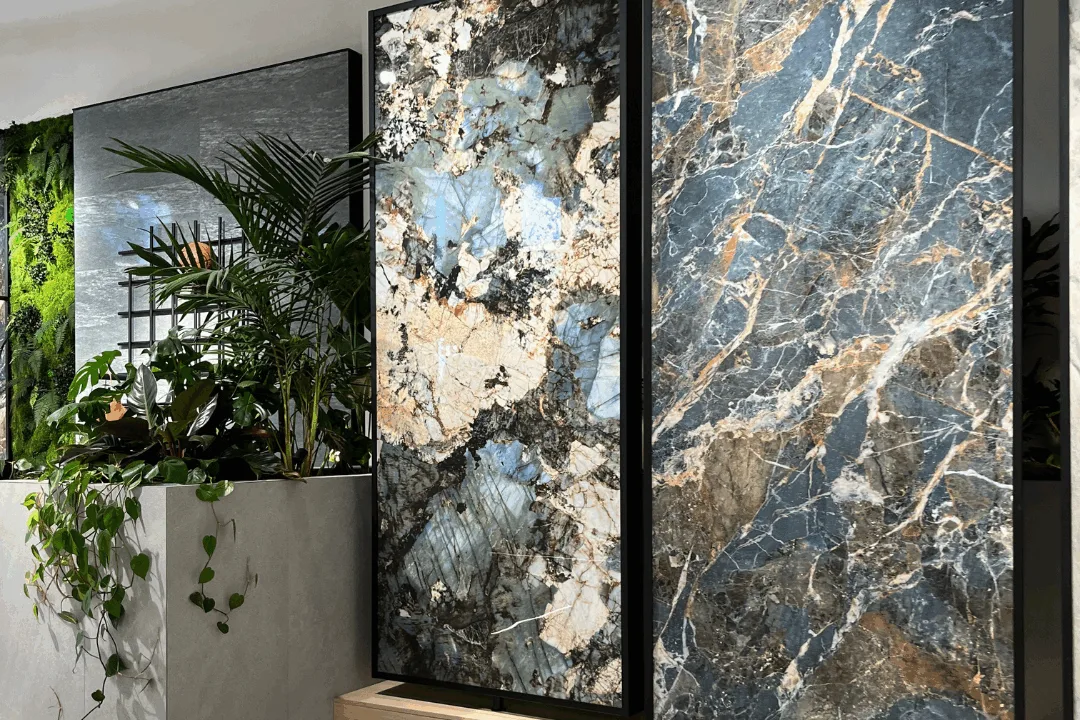
- Large-format slabs
- Ultra-thin porcelain
- Bookmatched decorative pieces
- 4D vein-tech
- Full-height panels
- Heavy 1200 × 600 formats
- Specialist adhesives, primers, decoupling systems
- Mitres and colour matched resin work replacing trims.
This isn’t “grab a cutter and go” work anymore.
And here’s the issue:
Again:
This isn’t about blaming tilers. It’s about acknowledging a system that doesn’t protect them, the retailers, or the client.
- Retail Hasn’t Evolved Fast Enough
Let me be honest, because I’ve lived both sides of this:
Too many retailers are still selling like it’s 2010.
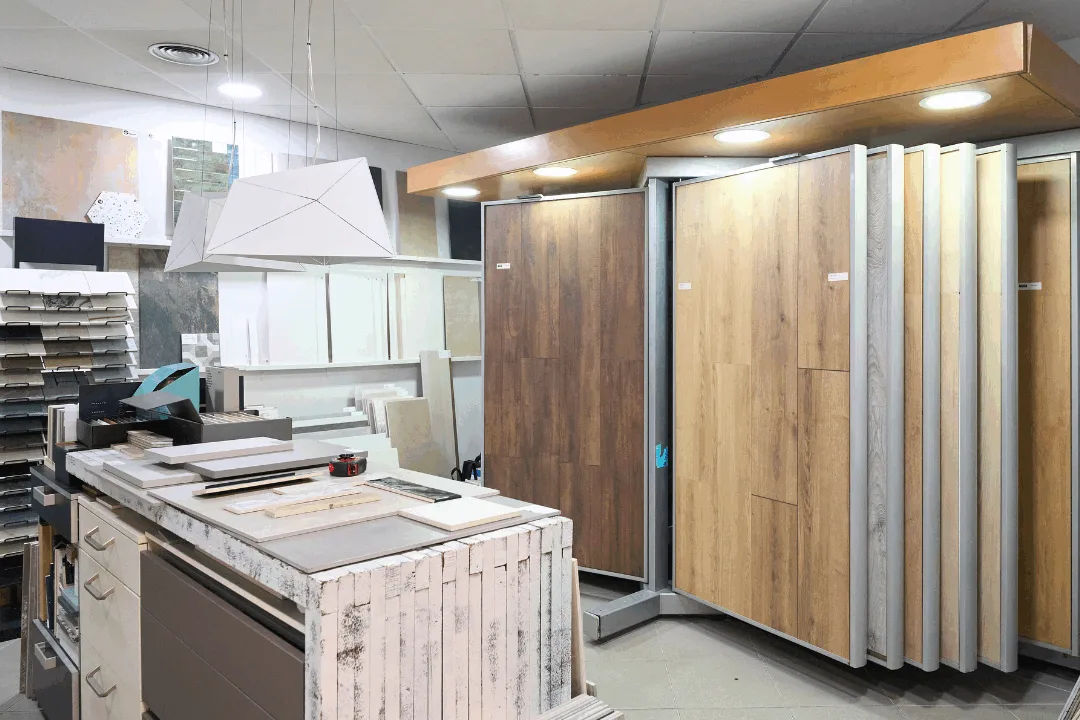
- Still scared of slabs.
- Still avoiding investment in displays.
- Still sticking to 30 × 60 and acting like 60 × 120 is “huge”.
- Still afraid to take risks.
- Still leaving design-led selling to showrooms that take £7k per set.
- Still replacing one wall with a tile because they need to get it on display.
Meanwhile:
Online retailers evolve monthly.
Alternative surfaces evolve yearly.
Factories evolve constantly.
If we don’t evolve with them, we get left behind.
The market doesn’t wait for anyone, and right now it’s moving faster than ever.
- The Whole Chain Is Under Pressure — Not Just One Part
Factories across Europe have kilns sitting cold.
Millions of square metres of stock sitting still.
Transport costs rising.
Admin rising.
Manufacturing rising.
Compliance rising.
Retailers cutting margins to compete with online.
Installers raising prices to survive rising costs.
Clients choosing alternatives because budgets won’t stretch.
Every link in the chain is reacting to the same pressure.
And this is the key point:
When every group is fighting to survive, everyone ends up accidentally working against each other.
No winners.
Just erosion.
- So What’s the Alternative?
Not racing to the bottom.
Not pointing fingers.
Not pretending everything is fine.
It’s education.
It’s evolution.
And it’s unity.
Tiles are the most durable, hygienic, premium surface in the home, especially in the last couple of years with the investment and evolution in technology.
They outperform LVT, panels, micro-cement, plaster alternatives, everything.
But clients aren’t being taught this anymore.
Retailers aren’t communicating it clearly.
Installers aren’t always supported in learning new systems.
Factories aren’t always educating the market properly.
Saying this even for me its very hard to keep up with trends, new tech and what is in fashion.
We need to reposition porcelain as the premium product it is.
- Why tiles add value to a home
- Why tiles sell high-net-worth properties
- Why tiles last decades when alternatives last years
- Why porcelain is sustainable long-term
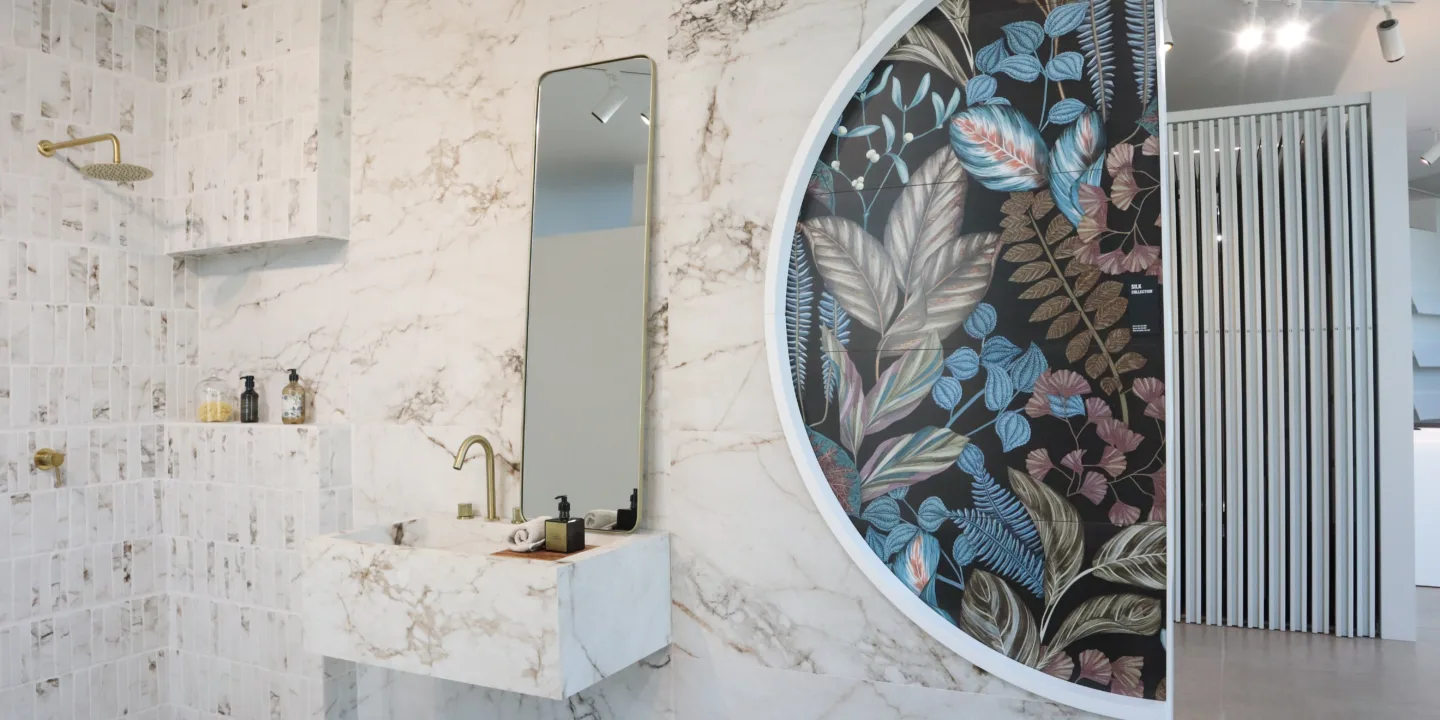
- Why design matters again
This is where we rebuild the blue ocean.
Not by cutting each other’s throats, but by pulling in the same direction.
This needs to start a conversation. A real one. A brutally honest one. Because if we don’t talk about it now, there won’t be many of us left to talk about it later.
6. A Personal Note
I’ve seen what this industry used to be.
At Christmas you couldn’t see your desk because of wine, oranges, balsamic vinegar, gifts from factories, reps dropping by with food hampers, handshakes that meant more than contracts.
5-star trips. Rewards for hitting a small £25k. Factories treating independents like partners.
That world is gone. But the spirit of it isn’t.
Independents built this industry.
Independents carried the knowledge.
Independents held the relationships.
Independents trained the next generation of fitters and designers.
And independents are still the backbone, even though the system is making it harder than ever.
I hear weekly about businesses closing, some that my dad worked alongside, some he respected, some he called friends.
It hits harder than people realise.
This isn’t about mourning what’s lost.
It’s about refusing to let the rest go the same way.
- Where Do We Go From Here?
We evolve.
We educate.
We pull together.
We create our own blue ocean.
Not one controlled by the largest consortiums.
Not one driven by the cheapest import.
Not one dictated by labour shortages or online undercutting.
A future built deliberately, by the people who actually care.
Suppliers → Transport → Retailers → Installers → End Clients
Every link protected.
Every link valued.
Every link strengthened.
Because without that, this industry keeps bleeding.
With it, we rebuild something worth being proud of again.
8. Who’s ready to build the new version of this industry?
Because the old one is gone.
And the next one is ours to create.
And personally I feel the time is now, we cannot wait any longer.
Book Your Private Consultation
Consultations are a friendly way for us to learn more about your project, no sales tactics, just opening the door to what's next.