Is Porcelain Tile Quality Slipping? What’s Really Happening Behind the Scenes
There are weeks in this industry that remind you how much is happening behind the scenes.
This week has been one of those weeks.
Transport costs have suddenly jumped again. There are conversations happening around fuel and gas surcharges returning across parts of the European supply chain, and you can feel the pressure building in the system again.
At the same time, we’ve had two completely separate projects this week where the quality of the tiles simply wasn’t what it should have been.
Now, when you buy from factories known for producing some of the best porcelain in the world, that raises a serious question.
What on earth is going on?
The Reality of Manufacturing Porcelain
Most people outside the industry don’t realise how energy intensive porcelain manufacturing actually is.
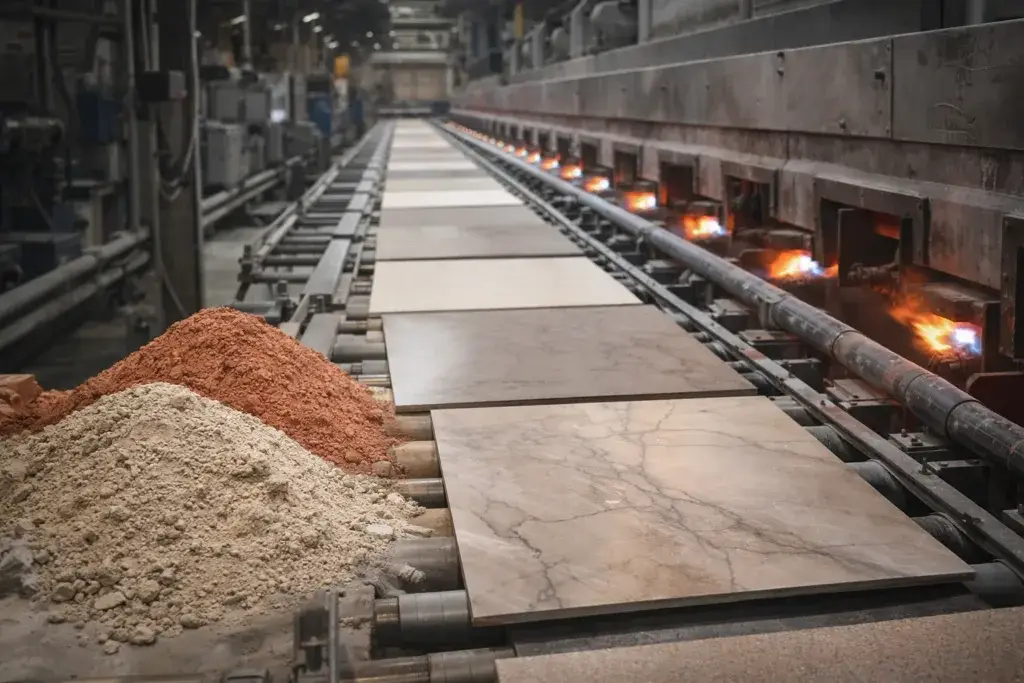
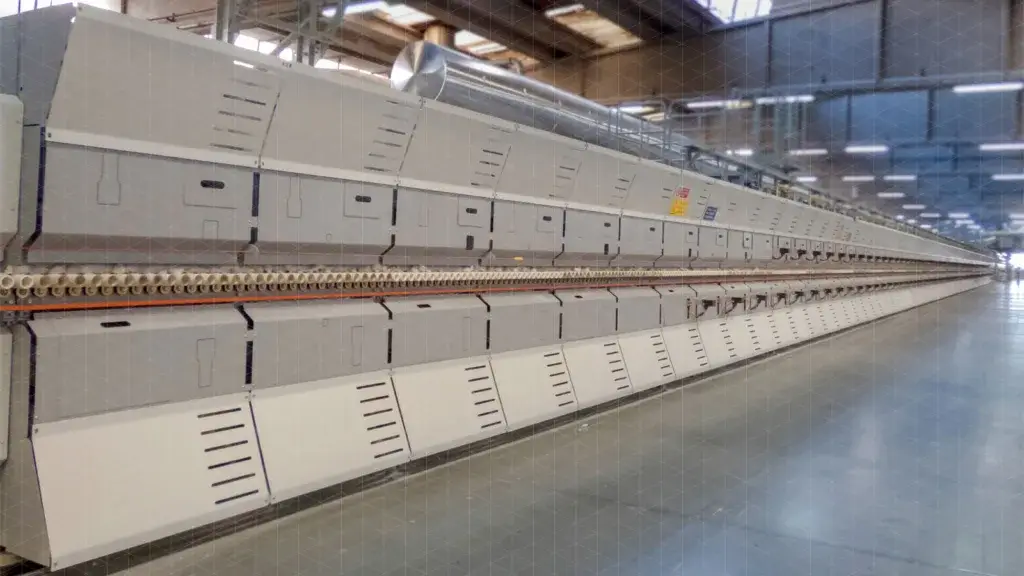
Picture a kiln that’s three hundred metres long. Inside that kiln you’ll find gas burners every thirty to fifty centimetres, heating the material to temperatures well over a thousand degrees.
The tile doesn’t simply pass through that kiln and come out finished. The process relies on very precise heating and cooling curves. The tile must warm gradually, reach the correct temperature, and then cool down slowly and evenly.
If that process changes, even slightly, the result changes too.
A tile might still look perfect when it comes out of the box. The colour is right, the finish is right, the dimensions appear correct.
But the moment a professional installer starts working with it, the problems appear.
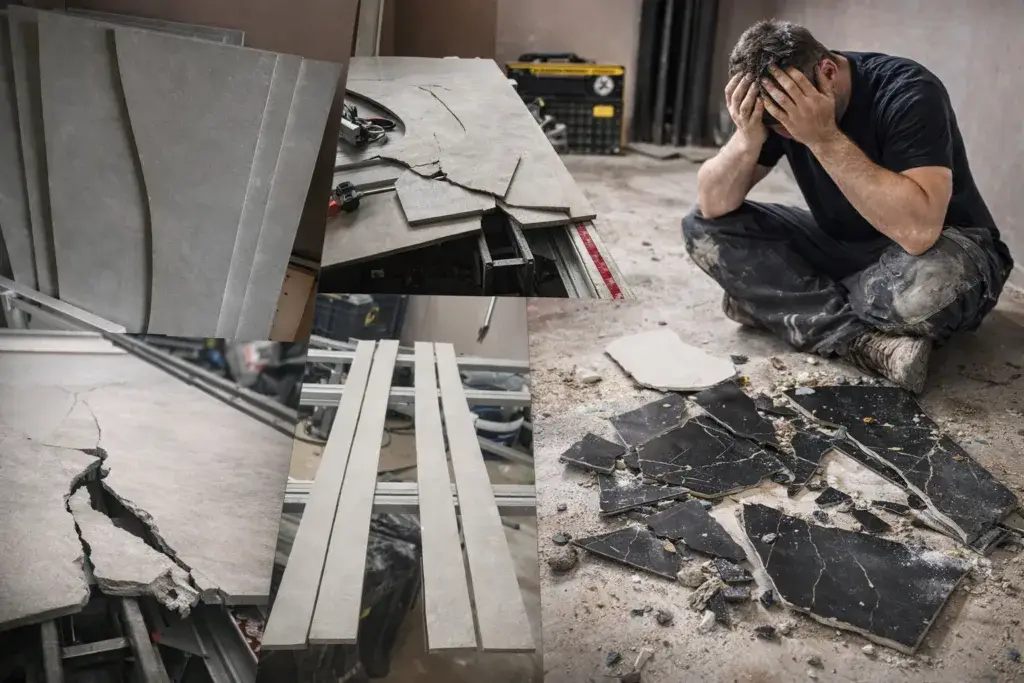
Tiles become too hard to cut.
Edges chip unexpectedly.
Panels warp slightly under stress.
And when you’re installing large format porcelain, three tiles that won’t cut correctly isn’t a minor inconvenience.
It’s expensive.
And it’s incredibly frustrating.
The Energy Problem Nobody Talks About
Gas is one of the largest costs involved in producing porcelain tiles.
When energy prices rise, factories feel that pressure immediately.
Now imagine the temptation from a manufacturing perspective.
If a factory can shorten the firing process even slightly, it could potentially produce thousands more square metres of tiles for the same amount of energy.
From a purely operational perspective, that looks like a logical business decision.
But when that decision begins to impact installers, suppliers and ultimately the client, the conversation becomes very different.
Because reputation in this industry is built over decades and destroyed in a handful of bad deliveries.
The Materials Problem
There is also another factor that cannot be ignored.
Since the war in Ukraine, many of the raw materials traditionally used in porcelain production have become harder to source or significantly more expensive.
Factories have had to experiment with alternative clays and mineral compositions.
Now that doesn’t automatically mean the product becomes inferior. Many manufacturers are extremely capable of adjusting their formulations.
But changes in raw materials combined with pressure on production timelines create a difficult environment.
And the result, increasingly, is inconsistency.
What This Looks Like on the Ground
For a reseller, situations like this create real problems.
Yes, in many cases the factory will replace the defective tiles. That’s not the issue.
The issue is everything that happens around that replacement.
This week alone we’ve had to source four additional tiles from one factory and nine from another simply to complete a high-end residential project.
Fortunately, we collect from Italy regularly, so we can add these onto existing transport runs.
But if that wasn’t the case, a small replacement delivery could easily cost three hundred and fifty pounds just to get a handful of tiles across Europe.
Multiply situations like that across a year and the costs quietly climb into the thousands.
Margins in this industry are not what people imagine.
And those costs rarely land with the manufacturers.
They land with the people standing between the factory and the client.
Protecting Reputation
For companies like ours, reputation is everything.
We sell premium surfaces because they are supposed to be premium.
They should look exceptional, perform correctly, and be installer-friendly.
When those standards begin to slip, the entire model becomes difficult to defend.
The installers we work with have been laying large format materials for years. They have the right equipment, the right cutters and the right knowledge.
When they raise concerns, we listen.
Because their feedback is usually the earliest warning sign that something in the manufacturing process has changed.
The Industry Conversation That Needs to Happen
This article isn’t written to point fingers at any one factory.
The manufacturers we work with are among the best in the world.
But across the industry we are hearing the same conversations repeated more and more often.
Installers noticing changes.
Suppliers managing replacement stock.
Projects being delayed over small but avoidable issues.
No one benefits from that situation.
Factories protect their reputation by maintaining consistency.
Suppliers protect theirs by delivering reliable products.
Installers protect theirs by producing flawless finishes.
When one part of that chain weakens, the entire system feels it.
Behind every finished project that looks effortless, there is an enormous amount of work that rarely gets seen. Materials have to be sourced from the right factories, production has to be scheduled correctly, logistics have to be coordinated across countries, and when things go wrong — as they inevitably sometimes do — someone has to step in and solve the problem quickly and responsibly. This is the part of the industry most clients never experience directly, but it is where the real work happens.
At Aura Surfaces, dealing with these challenges is simply part of the job. Every week we are coordinating manufacturers, managing deliveries, troubleshooting issues on site, and making sure that when a project reaches the installation stage the materials perform exactly as they should. Our responsibility is not just to supply surfaces; it is to protect the final outcome of the project and the reputation of the people building it.
However, experiences like the ones described in this article highlight something that the industry cannot ignore. Quality, consistency and accountability matter at every stage of the supply chain. When production shortcuts, material inconsistencies or rushed manufacturing start affecting installers, contractors and clients, it becomes a conversation that needs to happen openly rather than quietly behind the scenes.
We will always focus on solutions and continue doing everything possible to support the projects we are involved in. But as an industry we also need to raise the standard and hold manufacturers accountable for the quality they promise to deliver.
If you are working on a project where materials, timelines and performance genuinely matter, the right conversations need to happen early. And that is exactly where a design-led surface consultancy can make the difference.
Book Your Private Consultation
Consultations are a friendly way for us to learn more about your project, no sales tactics, just opening the door to what's next.